
Boiler Maintenance & Tune-Up Service in Eastern Massachusetts
A one-hour tune-up by a licensed technician catches problems while they're small, keeps the system running efficiently, and extends the boiler's lifespan by years.
Your boiler sat idle through the warm months. Now the temperatures are dropping and you're about to ask it to run 16 hours a day for the better part of half a year. A boiler that hasn't been serviced is a boiler that fails on the coldest night of the year, which is exactly the night you'll pay emergency rates to fix it.
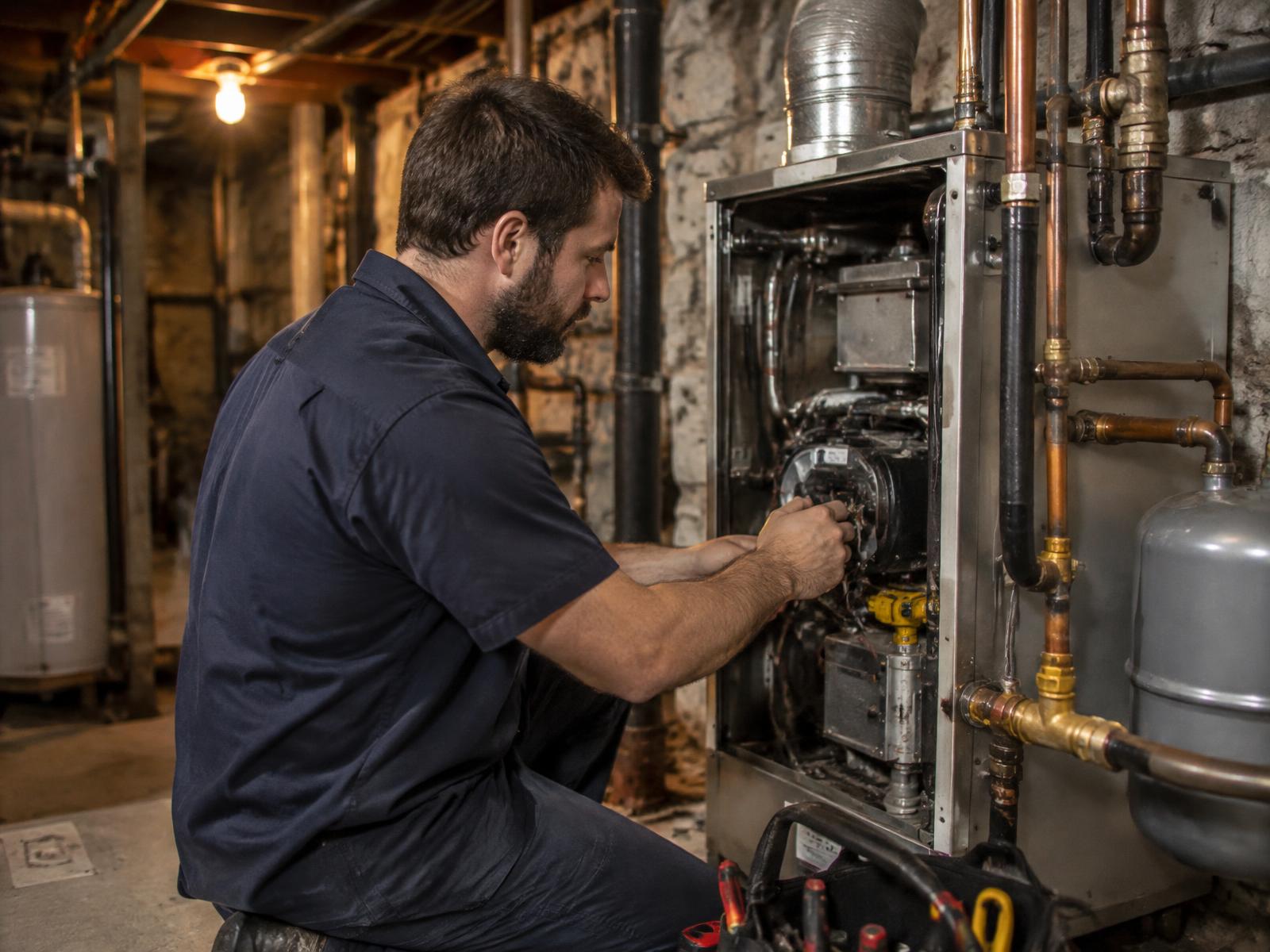
Annual boiler maintenance is the cheapest insurance policy for a Massachusetts home. A one-hour tune-up by a licensed technician catches problems while they're small, keeps the system running efficiently, and extends the boiler's lifespan by years. Here's what should be checked, whether you do part of it yourself or hire us to handle the full service.
What You Can Check Yourself (Before Calling a Professional)
- Thermostat test: set the thermostat 5 degrees above room temperature and confirm the boiler fires within a minute or two. If it doesn't respond, the issue may be the thermostat, wiring, or boiler controls, not the boiler itself.
- Visual inspection: look at the boiler and surrounding area. Any visible leaks, corrosion, soot deposits, or unusual staining on the unit or nearby walls? Any unusual smells (gas, burning, metallic)?
- Pressure gauge: most residential hydronic boilers should read between 12 and 15 PSI when cold. If the gauge reads below 10 or above 20, the system needs attention before you run it for the season.
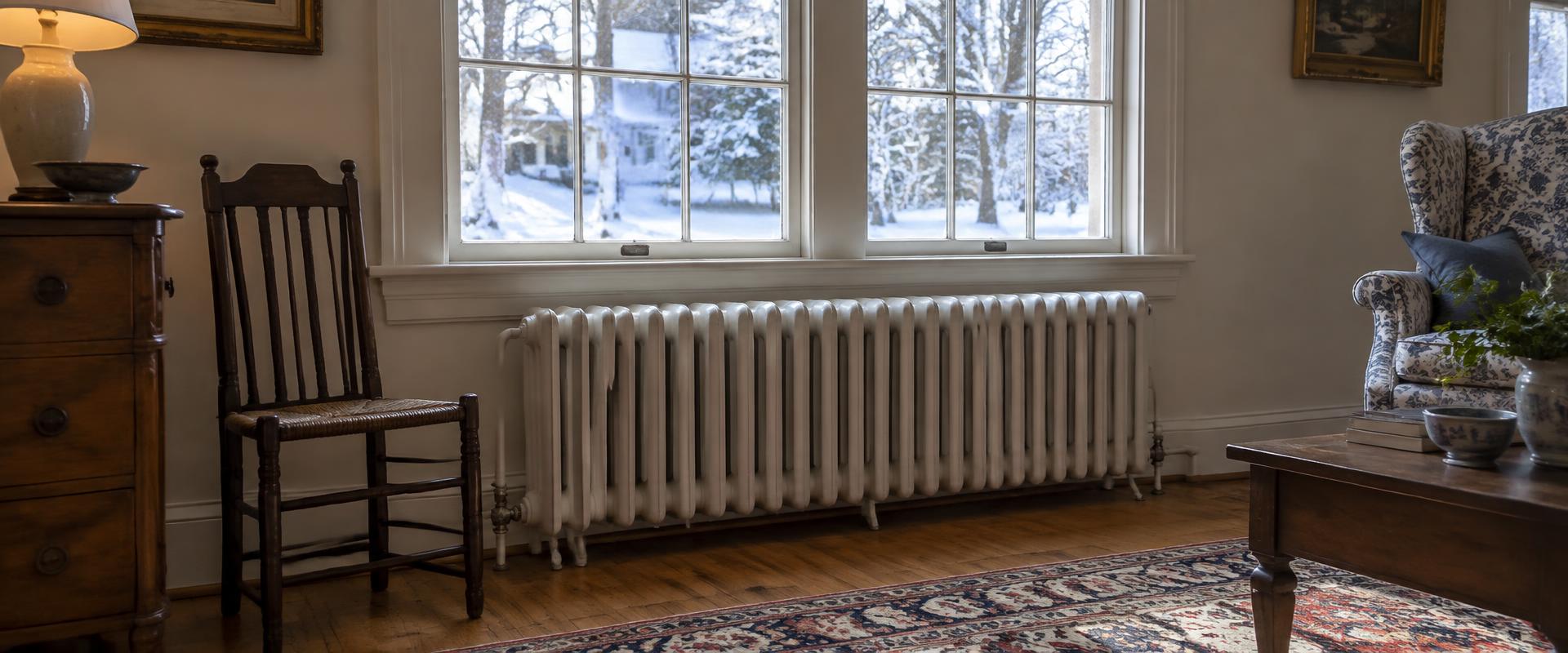
- Radiators and baseboards: walk through the house and check that all radiators and baseboards are getting warm when the boiler runs. Cold spots in one zone usually mean an airlock or a zone valve issue.
- Expansion tank: tap the expansion tank. The top should sound hollow (air) and the bottom should sound solid (water). If the whole tank sounds full of water, the bladder has failed and the tank needs replacement. Without it, pressure spikes can damage the system.
- Carbon monoxide detectors: confirm that every CO detector in the house has fresh batteries and is functioning. A boiler with a cracked heat exchanger or blocked flue can produce CO without any visible warning.
What a Professional Boiler Tune-Up Includes
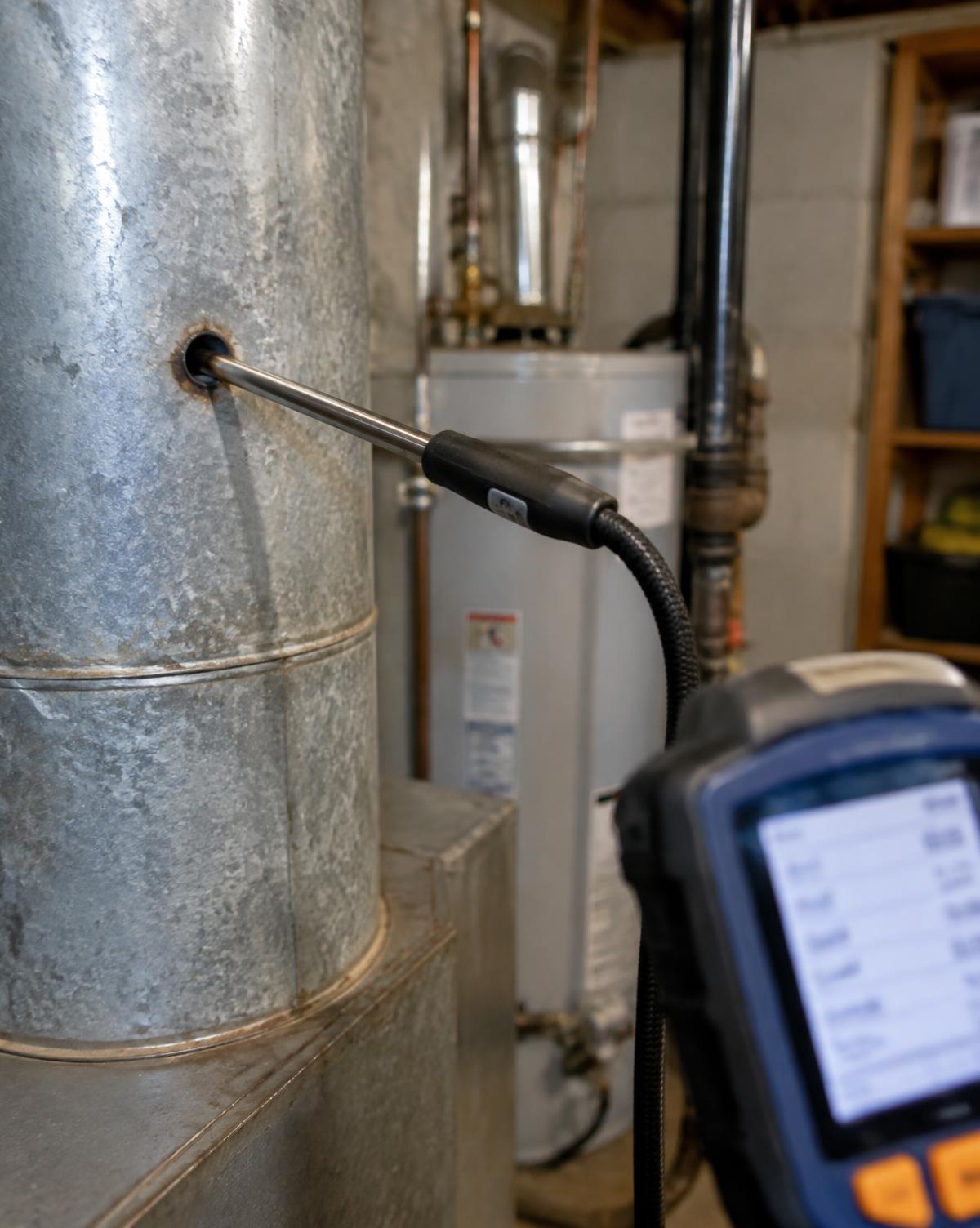
- Combustion analysis: we test the flue gases to measure combustion efficiency, CO levels, and draft. This tells us whether the burner is firing cleanly or wasting fuel and producing dangerous exhaust.
- Heat exchanger inspection: the heat exchanger transfers combustion heat to the water in the system. Cracks or corrosion here can cause CO leaks and efficiency loss. We inspect visually and by combustion readings.
- Burner cleaning and adjustment: we clean the burner assembly, inspect the flame pattern, and adjust the air-fuel mixture for optimal combustion. A dirty or misadjusted burner wastes fuel and produces excess CO.
- Flue and venting inspection: we check the flue pipe and chimney connection for blockages, corrosion, disconnections, and proper draft. A blocked flue is a CO hazard.
- Safety controls test: high-limit switch, low-water cutoff (if applicable), pressure relief valve, aquastat, and flame safeguard are all tested to confirm they'll shut the system down if something goes wrong.
- Circulator pump check: the pump that moves hot water through the system is inspected for leaks, noise, and proper operation. Some circulators need lubrication; modern ones are maintenance-free.
- Expansion tank pressure: we check and adjust the air charge in the expansion tank to match the system's fill pressure. A failed or improperly charged tank causes pressure fluctuations and relief valve discharge.
- System pressure and fill valve: we verify the automatic fill valve (pressure reducing valve) is maintaining proper system pressure and not overfilling.
- Bleed air from zones: trapped air in the system causes cold spots, gurgling radiators, and reduced efficiency. We bleed air from each zone to ensure full circulation.
Gas-fired boilers also depend on safe supply lines — see our gas piping service.
When Annual Maintenance Isn't Enough
A tune-up addresses normal wear. These situations require more than a maintenance visit:
- Boiler is 15+ years old: even with annual maintenance, components wear out. If the boiler is older than 15 years and repair frequency is increasing, replacement with a high-efficiency unit should be on the radar.
- Heating bills have climbed without rate changes: declining efficiency from a deteriorating heat exchanger or worn burner components means the boiler is burning more fuel for the same heat output.
- Frequent pressure drops: if you're adding water to the system regularly, there's a leak somewhere in the boiler, the piping, or a zone valve.
- Boiler cycles on and off rapidly (short-cycling): could be a thermostat issue, an oversized boiler, a failed aquastat, or a waterlogged expansion tank. All need diagnosis, not just maintenance.
- Strange smells near the boiler: a gas smell, metallic or burning smell, or exhaust smell near the boiler requires immediate attention. Shut off the system and contact a professional.
Thinking about replacement? Learn about high-efficiency boilers, or read our guide to boiler vs. furnace heating.
Frequently Asked Questions
Schedule Your Boiler Service
Don't wait until the first cold night to find out the boiler isn't working. Schedule your annual tune-up before the heating season rush books out every technician in the area. Request service through our contact page or call the number at the top of this page.