Frozen Pipe Prevention & Emergency Burst Pipe Repair in Eastern Massachusetts
24/7 emergency response for frozen and burst pipes, plus preventative services that stop pipes from freezing in the first place.
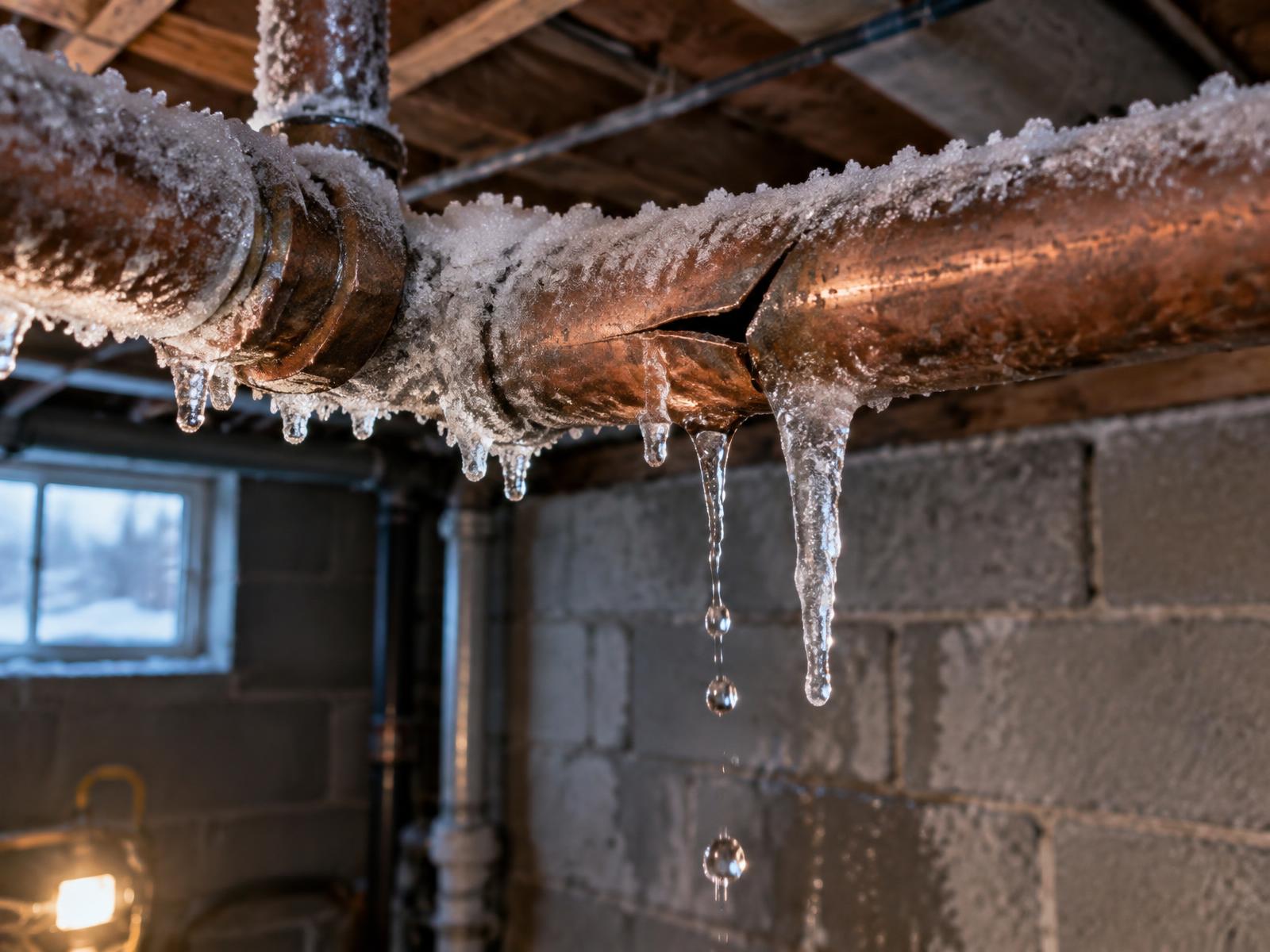
A frozen pipe is not a wait-and-see situation. Water expands when it freezes, and when it expands inside a closed pipe, the pressure builds until the pipe ruptures. A single burst pipe can flood a basement, destroy drywall, ruin finished floors, and cause tens of thousands of dollars in water damage in a matter of hours.
A1 Discount Plumber provides 24/7 emergency response for frozen and burst pipes across Eastern Massachusetts, plus preventative services that stop pipes from freezing in the first place. Our trucks carry pipe repair materials, thawing equipment, and emergency shutoff tools for immediate on-site response.
If You Have a Burst Pipe Right Now
Take these steps immediately while waiting for our emergency crew:
- Shut off the main water supply: find your main shutoff valve (usually in the basement, near the water meter) and turn it off. This stops the flow of water feeding the burst.
- Open faucets to drain pressure: open the cold water faucets nearest the burst to relieve any remaining pressure in the line and help drain the system.
- Turn off the water heater: with the main supply shut off, the water heater can overheat if it keeps firing with no incoming water. Shut it off at the breaker (electric) or gas valve (gas).
- Contain the water: use towels, buckets, and a wet/dry vacuum if you have one. Move valuables and electronics away from standing water.
- Do not use open flame to thaw pipes: never use a torch, space heater with an open element, or any open flame near frozen pipes. Use a hair dryer, heat lamp, or warm towels if you want to attempt gentle thawing before we arrive.
- Contact us immediately: we dispatch 24/7 for burst pipe emergencies.
What Happens When We Arrive
- Locate and isolate the burst: we find the exact failure point and isolate that section of pipe to restore water to the rest of the house as quickly as possible.
- Emergency pipe repair: the burst section is cut out and replaced with new pipe (copper or PEX depending on the system). Most emergency repairs are completed in one visit.
- Controlled thawing: if additional frozen sections exist, we thaw them safely using professional heat application equipment to prevent secondary bursts.
- System pressure test: after repair, we pressurize the system and check every connection to confirm no other sections have been compromised.
- Water damage assessment: we advise on immediate water extraction steps and can coordinate with restoration professionals if needed.
Which Pipes Freeze First?
In Massachusetts homes, certain pipes are far more vulnerable than others. Knowing which ones are at risk helps you prioritize prevention:
- Exterior wall pipes: pipes running through exterior walls (especially north-facing walls) are exposed to the coldest temperatures with the least insulation.
- Unheated spaces: pipes in garages, crawl spaces, unfinished basements, and attics have no ambient heat source.
- Hose bibs and outdoor faucets: the most commonly frozen fixtures. If they weren't shut off and drained before winter, they're the first to freeze.
- Kitchen and bathroom sinks on exterior walls: cabinet doors block warm air from reaching the pipes behind them. A common freeze point in older Massachusetts homes.
- Pipes near foundation cracks: cold air infiltration through foundation cracks can freeze nearby pipes even in otherwise heated basements.
Freeze Prevention Services
The cheapest burst pipe repair is the one you never need. We provide professional freeze prevention services for Massachusetts homes before the cold sets in:
- Pipe insulation: foam or fiberglass insulation on vulnerable pipes in unheated areas, crawl spaces, garages, and exterior walls.
- Heat cable installation: thermostatically controlled electric heat cables that wrap around at-risk pipes and activate automatically when temperatures drop.
- Hose bib winterization: shutting off and draining outdoor faucets and hose bibs before the first freeze.
- Main line insulation: protecting the water service line where it enters the home, particularly in unheated basements and crawl spaces.
- Thermostat guidance: ensuring your heating system maintains a safe minimum temperature (at least 55°F) in all areas where pipes run, including when you travel.
More tips in our guide: how to prevent frozen pipes in a Massachusetts winter.
Frequently Asked Questions
Don't Wait for the Freeze
If you've never had a professional assess your home's freeze risk, or if you've already had a pipe freeze in a previous winter, schedule a prevention visit before cold weather arrives. A few hours of insulation and preparation now prevents thousands in emergency damage later. Request service through our contact page or call the number at the top of this page.