
Sump Pump Installation & Repair in Massachusetts
A working sump pump is the difference between a dry basement and thousands in flood damage. A1 Discount Plumber installs, repairs, replaces, and battery-backs up sump pumps across Eastern Massachusetts — so the next storm doesn't become an emergency.
Get a Free QuoteYour Massachusetts Sump Pump Specialists
Spring snowmelt, nor'easters, hurricane remnants — Eastern Massachusetts basements take a beating. A correctly sized, properly installed sump pump quietly does its job in the background, sending groundwater away from your foundation 24/7. A1 Discount Plumber installs new sump pumps, repairs failing units, replaces old or undersized pumps, and adds battery backup systems so you're covered even when the power goes out — exactly when the storm hits.
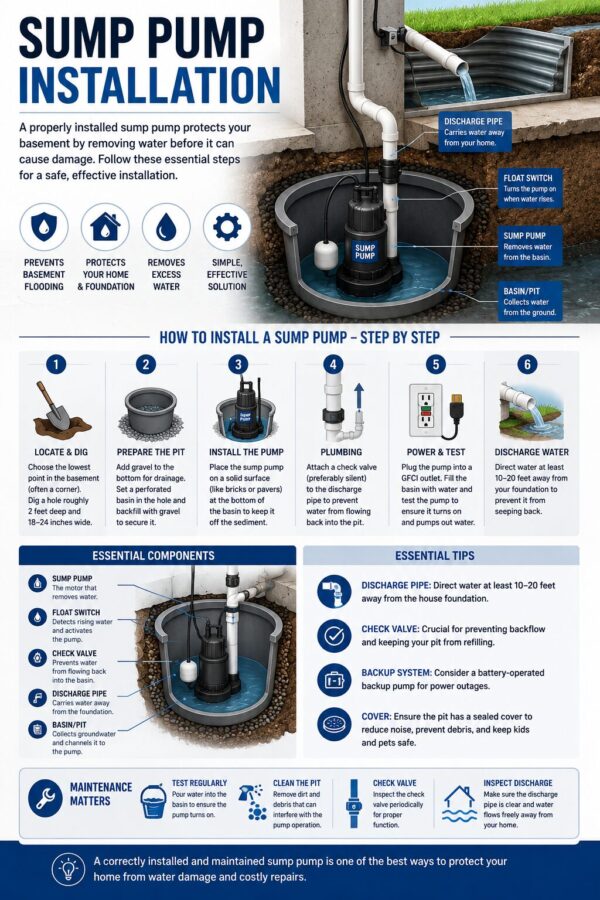
How a Sump Pump Is Installed
From digging the pit to the final discharge — the full picture of how a sump pump protects your home, plus the components that make it all work.
Complete Sump Pump Services
Whether you're putting one in for the first time, replacing a 15-year-old unit, or adding battery backup — we handle it all.
New Installation
Pit excavation, pump sizing, discharge piping, check valve, GFCI outlet — installed to code in one visit. Ideal for basements that have flooded once already.
Repair Service
Pump not turning on? Running constantly? Strange noises? We diagnose float switches, check valves, motors, and clogged discharge lines fast.
Pump Replacement
Most sump pumps last 7–10 years. If yours is older or undersized for your basement, replacement is more cost-effective than repeated repairs.
Battery Backup
Power outages happen during the worst storms — exactly when you need the pump most. Battery backup systems keep your basement dry when the lights go out.
Submersible or Pedestal — Which Sump Pump Is Right for You?
Two main sump pump designs, each with a clear best-use case. We'll recommend the right type based on your basement, your water table, and how much pump runtime you need.
Quieter, More Powerful, Longer Lasting
The motor sits inside the sump pit, fully submerged in the water it pumps out. The water itself helps cool the motor, which is why submersible pumps run quieter and tend to outlast pedestal pumps.
- Quieter operation — motor sits below the floor
- Higher horsepower options for severe water
- Typical lifespan: 7–10 years
- Higher upfront cost than pedestal
- Sealed sump pit (cleaner, less odor)
Cheaper, Easier to Service, Lasts Longer Per Motor
The motor sits on a column above the pit, with just the intake hose down in the water. Air-cooled motor means easier visual inspection and simpler repairs — but you'll hear it run.
- Lower upfront cost than submersible
- Motor lifespan can exceed 15 years
- Easier to inspect and service
- Louder during operation
- Less powerful — limited horsepower options
Signs Your Sump Pump Needs Attention
If you notice any of these, don't wait for the next storm to find out the hard way. Most issues can be fixed in one visit.
Pump Won't Turn On
Could be the float switch, a tripped breaker, a stuck impeller, or a failed motor. We diagnose it fast and have most parts on the truck.
Pump Runs Constantly
If it cycles non-stop even in dry weather, the float is stuck, the check valve has failed, or the pump is undersized for your water table.
Loud or Strange Noises
Grinding, rattling, or gurgling means worn bearings, debris in the impeller, or air locked in the discharge line. Catch it early to avoid replacement.
Rust, Visible Wear, or Old Age
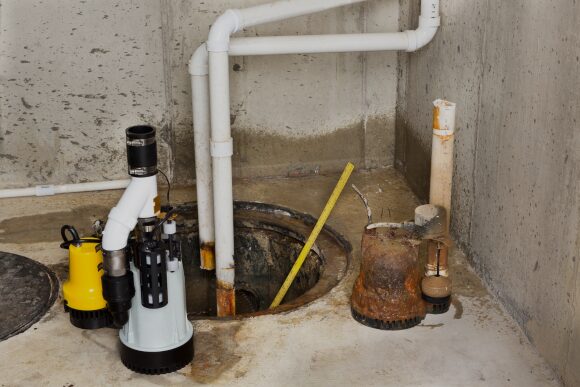
Sump pumps last 7–10 years on average. If yours is older than that, it's running on borrowed time — and they always fail during the storm.
Water in the Basement Anyway
If you're seeing standing water despite having a pump, it's either failing, undersized, or the discharge line is clogged or frozen.
No Battery Backup
Most basement floods happen during power outages caused by the same storm dropping the water. No backup = no protection when it matters most.
Massachusetts Storms Don't Wait. Don't Let Your Pump.
Nor'easters, spring snowmelt, and hurricane remnants flood Eastern MA basements every year — and the same storm that floods your basement often knocks out power to the pump. Get your sump pump tested, serviced, or upgraded before the next big one. Same-day emergency service available.
Emergency Sump Pump Service →
Why You Need a Battery Backup System
Here's the hard truth most homeowners don't think about until it's too late: the worst storms knock out the power AND drop the most water at the same time. Your main sump pump runs on house electricity. When the lights go out, so does your pump — and that's exactly when you need it most.
A battery backup sump pump system solves this:
- Activates automatically when the main pump loses power or fails
- Runs on a sealed deep-cycle battery that recharges between events
- Alerts you when battery is low, water level is high, or the system kicks on
- Buys hours of runtime — typically enough to ride out most power outages
- Adds redundancy even when the main pump fails for non-power reasons
For most Massachusetts homes — especially anywhere with a finished basement or chronic flooding history — battery backup isn't optional. It's the cheapest insurance policy you'll ever buy.
Annual Maintenance: The Cheapest Way to Keep Your Basement Dry
A sump pump is one of the few appliances in your home that's expected to work flawlessly the day you need it most — after sitting idle for months. Skipping maintenance is how those failures happen.
Our annual sump pump maintenance includes:
- Test the float switch — pour water into the pit and watch the pump cycle
- Clean the sump pit — remove sediment, debris, and any items that could clog the intake
- Inspect the check valve — confirm water isn't flowing back into the pit
- Verify discharge line — clear, properly sloped, and exiting at least 10–20 feet from the foundation
- Check the GFCI outlet — make sure the pump is plugged into a working outlet that won't trip
- Test battery backup — simulate a power loss to confirm the backup engages
Most maintenance calls take under an hour and cost a fraction of what a failed pump and flooded basement will. We recommend a service once a year — ideally before storm season hits.
Our Sump Pump Installation Process
No surprises. No "we'll have to come back." Here's exactly how a sump pump install goes from quote to first test.
In-Home Assessment
We evaluate your basement, water history, existing setup (if any), and where the discharge line should exit your home.
Flat-Rate Quote
Written quote covering pump, install, pit excavation if needed, check valve, discharge piping, GFCI, and battery backup if you want it.
Same-Day Install
Most installs are completed in one day. We dig or prep the pit, mount the pump, plumb the discharge, and wire it to a GFCI outlet.
Test & Walkthrough
We fill the pit with water and run the pump through multiple cycles. Then we walk you through operation, maintenance, and alerts.
Don't Wait Until the Basement Is Already Wet.
Schedule a free sump pump assessment — we'll evaluate what you have, what you need, and quote it honestly. Same-day service available across Eastern Massachusetts.
Sump Pump Questions, Answered
Straight answers to the questions Massachusetts homeowners ask us most.
Most sump pumps last 7 to 10 years, with submersible models often running closer to 10 years and pedestal pumps sometimes lasting 15+ years on the motor. Lifespan depends on how often the pump runs, water quality (sediment shortens life), how it was installed, and whether it gets regular maintenance. If your pump is 8+ years old, plan for replacement — they almost always fail at the worst possible moment.
Plan to replace your sump pump every 7–10 years even if it still seems to be working. Internal wear, weakened impellers, and degraded float switches aren't always obvious — until the pump fails during a storm. Replacing proactively costs a fraction of a flooded basement. We can assess your current unit and tell you honestly if it has more life in it or if replacement is the smart move.
A sump pump that won't shut off usually means one of four things: the float switch is stuck in the "on" position, the check valve has failed and water is cycling back into the pit, the pump is undersized for your water table and can't keep up, or the discharge line is clogged or frozen and water can't actually exit. All of these are diagnosable in one visit, and most are quick fixes.
A sump pump that won't turn on is most commonly caused by a tripped GFCI outlet, a stuck or broken float switch, a clogged or jammed impeller, or a burned-out motor. Less commonly, it's a problem with the power supply or the breaker. Pour a bucket of water into the pit to test — if the pump still doesn't cycle on, call a plumber before the next rain.
For most Massachusetts homes, yes. The same storms that flood basements often knock out the power that runs your main sump pump. Without backup, your pump goes dead exactly when you need it most. A battery backup system automatically takes over during outages or main pump failures, typically providing several hours of runtime. If you have a finished basement, valuable items stored downstairs, or any history of flooding, battery backup is essential.
Sump pump installation cost in Massachusetts varies based on whether you need a new pit excavated or have an existing one, the pump type and horsepower (submersible vs pedestal), whether you're adding battery backup, the discharge line routing, and whether any electrical work is needed for the GFCI outlet. We provide flat-rate written quotes after a quick in-home assessment — no hourly surprises. Call us for a free estimate on your specific situation.
Test your sump pump at least twice a year — once in early spring before snowmelt, and once in late summer before hurricane and nor'easter season. Pour a 5-gallon bucket of water slowly into the pit and watch the pump cycle on, evacuate the water, and shut off. If it doesn't activate, hesitates, makes unusual sounds, or doesn't fully drain the pit, schedule service. Annual professional maintenance is also strongly recommended.
A submersible sump pump sits entirely inside the sump pit, with the motor underwater (it's sealed and cooled by the surrounding water). A pedestal sump pump has the motor mounted on a column above the pit, with only the intake submerged. Submersibles are quieter, more powerful, and typically last 7–10 years. Pedestals are louder and less powerful but easier to service and the motors can last 15+ years. We recommend submersibles for most Massachusetts homes, especially finished basements.
The discharge pipe should direct water at least 10 to 20 feet away from your foundation, into an area that slopes away from the house. Never discharge into a sanitary sewer (illegal in most Massachusetts municipalities), into a window well, or directly against the foundation — that water will just seep right back in. In winter, the discharge line needs freeze protection or it'll back up. We handle all of this as part of a code-compliant install.
No — they're different services for different problems. A sump pump removes groundwater that collects in a basement sump pit, preventing flooding. A sewer pump (also called an ejector pump) pumps wastewater from below-grade fixtures (like a basement bathroom) up to the main sewer line. If you have a basement bathroom, laundry, or other plumbing fixture below the sewer line, you need a sewer pump — see our sewer pumps page. If your problem is groundwater seeping in or basement flooding during storms, you need a sump pump.
Yes. A1 Discount Plumber installs, repairs, replaces, and maintains sump pumps and battery backup systems across Eastern Massachusetts — including Acton, Acushnet, Ashland, Bellingham, Berkley, Berlin, Bolton, Boxborough, Dartmouth, Fall River, Foxborough, Grafton, and New Bedford. Call +1 (508) 556-2269 for same-day service or to schedule an assessment.
Sump Pump Service Across Eastern MA
Acton • Acushnet • Ashland • Bellingham • Berkley • Berlin • Bolton • Boxborough • Dartmouth • Fall River • Foxborough • Grafton • Marlborough • New Bedford • Taunton • And surrounding Eastern Massachusetts communities.
A Dry Basement Starts With One Call.
Free in-home assessment. Honest recommendation. Same-day service. Storm season won't wait — and neither should you.