When Should You Call a Plumber?
Call a plumber immediately for emergencies like burst pipes, sewage backups, no hot water, active flooding, or overflowing toilets. Call for non-emergency service when plunging doesn’t clear a clog, your water bill spikes unexpectedly, multiple drains run slow at once, your water heater is over 10 years old, or you notice persistent leaks, unusual noises, or sewer smells. DIY is fine for minor sink clogs, dripping faucets you can isolate, and simple part swaps — anything involving the main line, gas, or your water heater needs a pro.
The Honest Truth About DIY Plumbing
Every plumber will tell you the same thing: they make the most money fixing other people’s DIY attempts. A $15 fitting installed wrong can turn into a $2,000 water damage claim overnight. At the same time, calling a pro for a clog you could’ve plunged in 90 seconds is a waste of money.
The pros at A1 Discount Plumber have been serving Eastern Massachusetts for years. We’ve seen which problems homeowners can handle themselves, which ones need a licensed plumber, and which ones turn into emergencies if you wait too long. This guide breaks it all down — 15 of the most common plumbing problems, decoded with a clear “DIY” or “Call a Pro” verdict for each.
3 Questions to Ask Before You Decide
Before you grab the wrench OR the phone, run through these three checks. They’ll tell you everything you need to know about whether the problem is yours to fix or ours.
Is Water Actively Damaging Anything?
Active flooding, water near electrical, sewage backing up, or visibly soaked drywall/floors = stop everything and call a plumber NOW. Damage is happening by the minute.
Does Fixing It Involve Gas, Sewer, or Main Line?
Anything connected to your gas line, main water line, or sewer line is a pro-only job. The risks (gas leaks, contamination, code violations) far outweigh any savings from DIY.
Can You Fully Isolate the Problem?
If you can shut off water to just one fixture and the issue is contained there, DIY is often safe. If the whole house is affected, the problem is deeper than a single fitting.
15 Common Plumbing Problems — Decoded
For each problem: a verdict (DIY-safe, Call a Pro, or sometimes both) and the honest reasoning behind it.
1. Minor Sink Clog
Hair, soap, or food in a single sink drain. A plunger, baking soda + vinegar, or a $10 hand snake almost always clears it. Skip the Drano — it can damage pipes.
2. Toilet Clogged (Single Toilet)
If only one toilet is clogged, a flange plunger (the bell-shaped kind) clears 90% of clogs. If it doesn’t and you can hear gurgling from other drains, that’s a main-line issue — call a pro.
3. Dripping Faucet (Cartridge)
Worn cartridge or washer is usually the culprit. Shut off the supply valves under the sink, swap the cartridge, and you’re done. Replacement parts are $5–$30.
4. Burst Pipe
Shut off your main water valve immediately, then call. Burst pipes cause thousands in damage per hour. This is never a DIY job — even temporary patches need a pro to follow up.
5. Sewage Backup
Sewage coming up through drains or toilets is a health hazard AND a sign of a serious main line blockage. Don’t touch it. Emergency plumber service only.
6. No Hot Water
Could be a pilot light, heating element, dip tube, or a dying tank. Water heaters involve gas or 240V electric. Pro-only job — see our water heater service.
7. Running Toilet
If it’s a worn flapper or fill valve, you can swap them for $10 in 20 minutes. If the tank cracks, the flush valve fails, or it keeps coming back, call a pro before it floods.
8. Sudden High Water Bill
A bill that doubles overnight means a hidden leak — under a slab, in a wall, or in a service line. Without leak detection equipment, you can’t find it. Always pro.
9. Multiple Slow Drains
One slow drain = local clog. Multiple slow drains = main line blockage. Snaking won’t fix it long-term — you likely need hydro jetting.
10. Sewer Smell from Drains
That rotten egg smell is sewer gas — meaning a dry P-trap, broken vent stack, or compromised sewer line. All require a pro to diagnose. Don’t ignore it; it’s a health risk.
11. Low Pressure (Single Fixture)
Aerator or showerhead clogged with mineral buildup. Unscrew, soak in vinegar overnight, scrub, and reinstall. Free fix in 10 minutes.
12. Low Pressure (Whole House)
If pressure dropped everywhere, the issue is your service line, pressure regulator, or municipal supply. Pro-only diagnosis — and possibly leak detection.
13. Soggy Yard / Wet Spots
Constantly wet ground when it hasn’t rained means a buried water or sewer line is leaking. Underground lines need professional leak detection — DIY isn’t an option.
14. Water Heater Leaks or Noises
Any leak from a water heater, popping/rumbling sounds, or rusty water means the tank is failing. A 40-gallon tank rupture floods a basement fast. Replace before it fails.
15. Loose Under-Sink Fittings
Small drips at the P-trap or supply line connections? Hand-tighten or use channel-lock pliers. If tightening doesn’t fix it, the washer or fitting is shot — and that’s still a 15-minute swap.
When to Call a Plumber — At a Glance
Save this for the next time something starts dripping, gurgling, or making a smell you can’t ignore. It tells you exactly when to act fast and when to schedule.
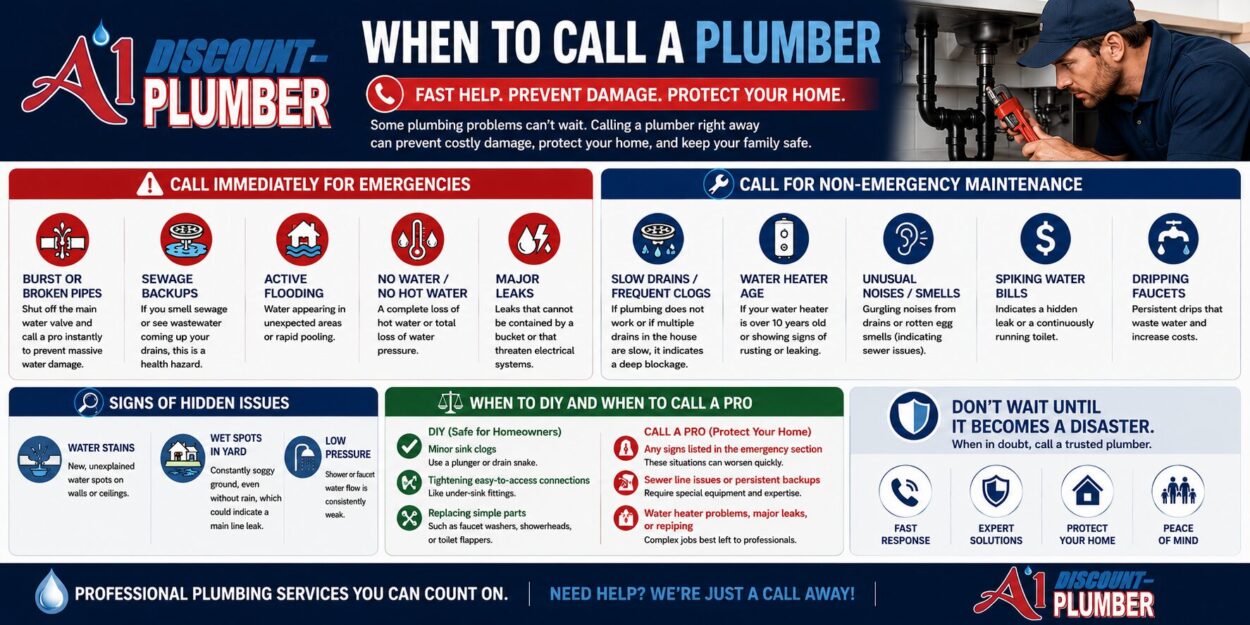
Call IMMEDIATELY for Emergencies
These can’t wait — every minute matters.
- Burst or Broken PipesShut off the main water valve and call a pro instantly to prevent massive water damage.
- Sewage BackupsIf you smell sewage or see wastewater coming up your drains, that’s a health hazard — stop using water and call.
- Active FloodingWater appearing in unexpected areas or rapidly pooling means a major leak somewhere upstream.
- No Water / No Hot WaterComplete loss of hot water or total loss of water pressure throughout the house.
- Major LeaksAny leak that cannot be contained by a bucket or that threatens electrical systems.
- Overflowing ToiletIf shutting off the toilet’s supply valve doesn’t stop it, the problem is downstream — main line issue.
Call SOON for Maintenance
Not an emergency — but waiting makes it worse.
- Slow Drains / Frequent ClogsIf plunging does not work or multiple drains are slow, you have a deep blockage forming.
- Water Heater AgeIf your water heater is over 10 years old or showing signs of rust or leaking, plan replacement now.
- Unusual Noises / SmellsGurgling noises from drains or rotten egg smells indicate sewer issues developing.
- Spiking Water BillsA jump in your water bill almost always means a hidden leak or running toilet.
- Persistent Dripping FaucetsDrips waste water and increase costs — and usually mean cartridges are deteriorating.
- Low Water PressureIf pressure stays consistently weak even after cleaning aerators, the issue is deeper.
What’s Actually Safe to DIY
You don’t need to call us for everything. Plenty of common plumbing problems are 15-minute jobs with stuff you already have under the sink. Here’s the green-light list — anything outside of this should be a pro call.
Plunging a Single Clogged Drain
Sink, tub, or toilet — a good plunger and a few minutes solves most isolated clogs.
Tightening Loose Fittings
Under-sink connections, supply lines, P-traps. Hand-tighten first, then use channel-locks gently.
Swapping a Toilet Flapper or Fill Valve
$10 part, 20 minutes, no tools beyond what you have. YouTube has a 5-minute video for every brand.
Cleaning Aerators & Showerheads
Unscrew, soak in white vinegar overnight, scrub, reinstall. Fixes 90% of “low pressure” complaints on individual fixtures.
Resetting a Tripped Garbage Disposal
Most disposals have a red reset button on the bottom. Press it, try again. If it hums but doesn’t spin, unplug and use the hex key.
Replacing a Sink Faucet (Sometimes)
If your shut-off valves work and you’re comfortable with basic tools, a faucet swap is doable. If the valves are stuck or you can’t isolate water, stop and call.
Hidden Plumbing Issues You Can’t Afford to Miss
These don’t look urgent — but they’re warning signs of bigger problems already happening behind your walls or under your floors.
Water Stains on Walls or Ceilings
New, unexplained stains mean an active leak above. Even if it’s small, it’s been leaking for a while — drywall and insulation are already damaged.
Soggy Spots in the Yard
Constantly wet ground without rain often signals a main water line or sewer leak buried in your yard. Underground = pro-only diagnosis.
Weak Pressure Across the House
Pressure that’s consistently low everywhere — not just one fixture — usually points to a pressure regulator failure or main line issue.
Gurgling From Drains
Toilets bubbling when you run a sink, or sinks gurgling when the washer drains, means your venting is compromised or the main line is partially blocked.
Rusty or Discolored Water
From hot taps = water heater corroding internally. From cold taps too = service line or municipal issue. Either way, get it checked.
Spiking Water Bill
If your bill jumped without lifestyle changes, you have a hidden leak burning water 24/7. Cheaper to find it than keep paying.
What Affects the Cost of a Plumber?
Every plumbing call is different — but these are the main factors that move the price up or down.
Emergency or After-Hours
Same-day, weekend, or after-hours service costs more than scheduled work — but stops the damage from spreading.
Complexity of the Job
A flapper swap is fast. Replacing a hidden leak inside a wall, repiping, or installing new fixtures takes hours and specialty tools.
Accessibility
An exposed pipe under the sink is fast. Pulling drywall, lifting a slab, or excavating a yard adds significant labor.
Parts & Materials
Standard parts are cheap; high-efficiency fixtures, specialty valves, or major equipment (water heaters, pumps) drive the total up.
Permits & Code Compliance
Some jobs require Massachusetts permits and inspection — water heater swaps, gas work, repiping. Built into the quote when needed.
Existing System Condition
Old pipes, corroded fittings, or DIY repairs done wrong can add unexpected work. Honest plumbers will explain before doing extra.
Got a Problem You’re Not Sure About?
Send us a description (or a photo) and we’ll tell you whether it’s DIY-safe or whether it needs a pro before you make it worse. Free over the phone — no upsell.
When to Call a Plumber — Common Questions
The questions Massachusetts homeowners ask us before picking up the phone.
Call a plumber immediately for any active flooding, burst pipes, sewage backups, complete loss of water or hot water, or any leak that threatens electrical systems. Call for scheduled service when plunging or basic DIY hasn’t fixed the problem, when you have multiple slow drains, when your water bill spikes, when your water heater is over 10 years old, or when you notice persistent dripping, sewer smells, or unusual noises. As a rule: if water is actively damaging something, if gas or sewer is involved, or if the problem affects the whole house, call a pro.
Safe DIY plumbing jobs include plunging single-drain clogs, replacing toilet flappers and fill valves, swapping faucet cartridges, tightening loose under-sink fittings, cleaning aerators and showerheads, resetting garbage disposals, and basic faucet replacements if you can isolate the water supply. Anything involving the main water line, gas lines, sewer line, water heater, or work inside walls should go to a licensed plumber. Massachusetts also requires permits for certain types of plumbing work.
A single slow drain is rarely an emergency — try a plunger or a hand snake first. But if multiple drains are backing up at the same time, if water comes up in unexpected places (toilet flushes and the tub fills), if sewage smell accompanies the clog, or if water is overflowing onto floors, that’s a main line blockage and qualifies as an emergency. Call for emergency drain service right away.
Call immediately for any leak you can’t contain with a bucket, leaks near electrical wiring or outlets, leaks behind walls (sign: water stains, soft drywall, musty smell), leaks under slabs, leaks from your water heater, and any leak in your main service line or gas line. Small, easily-isolated drips from a faucet or a known under-sink fitting can wait until normal business hours — but shut off the local supply valve in the meantime to limit waste.
The “1/3/5 rule” (sometimes called the 135 rule) refers to drainage pipe slope — drainage pipes need a minimum slope (typically 1/4 inch per foot for smaller residential lines, with different ratios for larger main lines) to ensure waste flows properly without backing up. Pipes that are too flat or too steep both cause recurring clogs no matter how many times you snake them. If your drains clog repeatedly despite cleaning, improper slope or venting is often the underlying cause — and that’s a pro-level fix.
A sudden spike in your water bill almost always means a hidden leak. Common culprits: a constantly-running toilet (can waste 200+ gallons a day), a slab leak under your foundation, a service line leak in the yard, a failed pressure regulator causing constant minor leakage, or a dripping fixture you can’t see (inside a wall, under a sink in an unused bathroom). Professional leak detection finds it without tearing your house apart.
For active leaks, yes — find your main water shut-off valve (usually in the basement, crawlspace, or near your water meter) and turn it clockwise to shut off water to the whole house. For localized issues (one toilet, one sink), shut off only the local supply valves at the fixture so you don’t lose water to the rest of the house. Knowing where your main shut-off is BEFORE an emergency happens is the single most valuable piece of plumbing knowledge a homeowner can have.
For emergencies (burst pipes, sewage backups, active flooding, gas smells) — minutes matter. Shut off the main and call now. For non-emergencies, sooner is always cheaper. A small leak ignored for a week becomes drywall damage. A dripping faucet ignored for a month wastes hundreds of gallons. A water heater showing rust ignored for a year becomes a flooded basement. As a general rule: anything visibly worsening, getting louder, or generating new symptoms is your sign to call now.
A single clogged toilet that you can shut off (turn the valve behind the toilet clockwise) isn’t an emergency — just use another bathroom and call during business hours. It becomes an emergency when: water rises and starts overflowing despite shutting off the valve, multiple toilets are clogged at once (main line issue), or sewage backs up into tubs or showers. Those are immediate-call situations.
Yes. A1 Discount Plumber provides emergency and scheduled plumbing services — including 24-hour emergency plumbing, drain cleaning, water heater repair, sump pumps, leak detection, and more — across Eastern Massachusetts. Call +1 (508) 556-2269 for same-day service.
Real Help, Right Away.
Free phone consultation. Honest DIY-or-pro assessment. Same-day service across Eastern Massachusetts when you need it.